Automotive mounting systems are the quiet supports that help keep key vehicle components in place. They connect parts such as the engine, transmission, exhaust, and body to the vehicle’s structure. A mount may look like a small bracket or rubber-and-metal assembly, yet it can influence vibration, noise, alignment, and component movement. What is the function of automotive mounting systems? In practical terms, they help secure components while managing forces and reducing vibration transferred through the vehicle. The exact job varies by location and design.
This guide to the 2026 best automotive mounting systems explains what these parts do and what to consider when comparing them. Mounts can use rubber, hydraulic elements, or other engineered materials, each with different performance characteristics. A design suited to a daily commuter may not be the right choice for a heavy-duty vehicle or a performance application. Fitment matters. So does the vehicle’s intended use. A mount that appears sturdy is not automatically the best option; stiffness, durability, compatibility, and installation requirements also count. That distinction is easy to miss.
We’ll look at how mounting systems manage vibration and support components, along with practical signs of wear and replacement considerations. Because mounting layouts differ across makes and models, always verify specifications against reliable vehicle information or a qualified technician’s assessment. There is no universal best mount. Even a well-made part can perform poorly when it is mismatched or installed incorrectly. Some choices involve trade-offs, and real-world conditions can reveal details that a product description cannot.
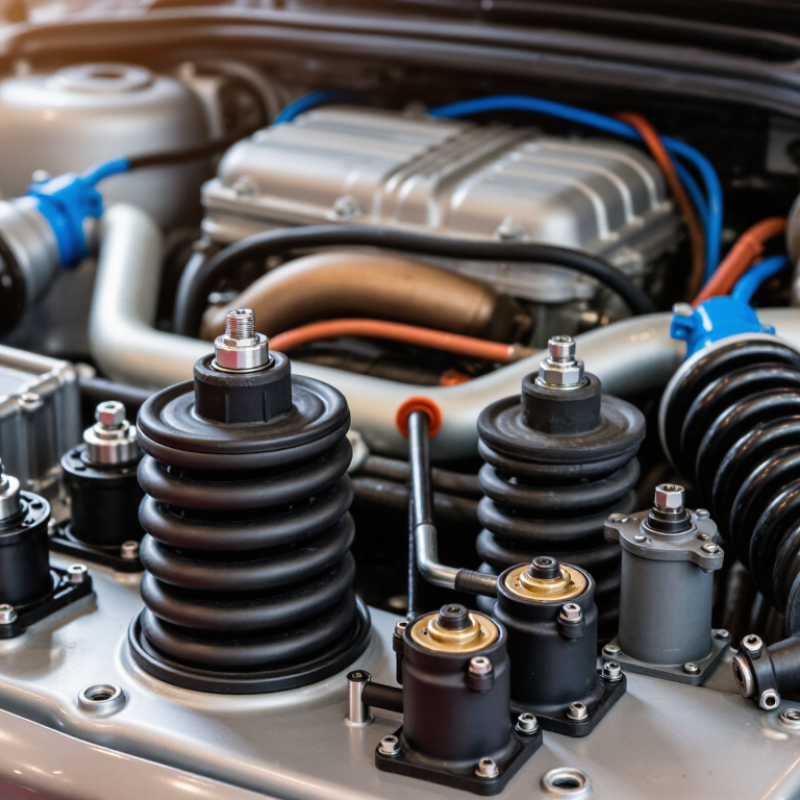
Automotive Mounting Systems: Definition, Purpose, and Vehicle Load Paths
2026 Best Automotive Mounting Systems What Do They Do?
Automotive Mounting Systems: Definition, Purpose, and Vehicle Load Paths
Automotive mounting systems include brackets, isolators, bushings, and fasteners that secure vehicle components. They connect parts such as engines, transmissions, suspension assemblies, and body structures. Their purpose goes beyond keeping parts attached. They also manage vibration, movement, and changing forces during driving. A rubber isolator, for example, can reduce engine shake reaching the cabin while allowing controlled movement. Details matter.
A vehicle’s load path describes how force travels through connected parts. When a tire hits a pothole, force moves through the wheel and suspension, then into the subframe or body. Mounts help transfer and spread these loads. Powertrain mounts handle torque reactions as the engine accelerates or the vehicle changes gear. A worn mount can allow excess movement, causing clunks, vibration, or added stress elsewhere. It may still look intact. Visual checks alone can miss internal wear, a detail that is easy to overlook.
Tips: Check for cracked rubber, loose hardware, fluid leaks, and new vibration. Compare symptoms under similar conditions, and consult service specifications before replacing a mount. No single symptom proves the mount is faulty.
Main Mount Types: Powertrain, Suspension, Body, and Accessory Supports
Automotive mounting systems hold components in position while limiting unwanted movement, vibration, and noise. Powertrain mounts support the engine and transmission, which can shift under acceleration or braking. Their rubber or fluid-filled elements absorb some of that motion before it reaches the cabin. A cracked mount may show sagging, torn rubber, or excess engine movement. Feel matters, but it is not a diagnosis by itself.
Suspension mounts connect parts such as control arms, struts, and stabilizer links to the vehicle structure. They help manage wheel movement and road impacts. Body mounts sit between the frame and body on many vehicles, softening vibration and allowing slight movement as the chassis flexes. Clunks over bumps can point to worn mounting points, but loose hardware or damaged suspension parts can sound similar. That distinction is easy to miss.
Accessory supports secure components such as radiators, exhaust sections, and some pumps or compressors. Their job is smaller, but a loose bracket can still cause rattling, hose strain, or contact with nearby parts. Check for shifted fasteners, polished rub marks, and cracked isolators. Do not overtighten by guesswork. Mount designs and torque requirements vary, and a quick visual check cannot reveal every hidden fault. A little uncertainty is useful here.
How Rubber, Hydraulic, and Active Mounts Control Vibration and NVH
2026 Best Automotive Mounting Systems What Do They Do?
Automotive mounts connect the powertrain to the vehicle structure while limiting vibration and noise. Rubber mounts use flexible elastomer to absorb engine movement and soften vibration at idle. They are simple, but heat and age can make rubber stiff or cracked. A worn mount may cause a noticeable shudder through the steering wheel.
Hydraulic mounts add fluid-filled chambers that respond to different vibration frequencies. They can reduce low-speed engine shake while still supporting heavier movement during acceleration. Active mounts use electronic controls to adjust their response as operating conditions change. Sensors and control systems help target specific vibration patterns, though added complexity can mean more parts to diagnose. The boundaries between these designs are not always neat; performance depends on the vehicle’s layout, tuning, and mount condition.
Tips: Check for torn rubber, fluid leaks, or unusual engine movement during inspection. Compare symptoms at idle and during gentle acceleration. A single vibration does not prove a mount has failed, so confirm the cause before replacing parts.
Automotive Mounting Systems: How They Control Vibration and NVH
Modeled force transmissibility for representative passive rubber and hydraulic mounts. Lower values mean less vibration force is transmitted to the vehicle body. Active mounts use sensors and actuators to counter vibration; their performance depends on the control system and operating conditions, so no universal active-mount curve is shown.
Illustrative model, not measured product data. Curves use the standard single-degree-of-freedom force-transmissibility equation, with assumed natural frequencies and damping ratios: rubber 15 Hz and 0.15; hydraulic 12 Hz and 0.25. Actual mount behavior varies with design, load, temperature, and frequency.
Engineering Validation: ISO 16750-3 Mechanical-Load Tests for Vehicle Components
Automotive mounting systems must hold sensors, control units, and wiring steady while a vehicle vibrates, jolts, and changes temperature. OICA reported approximately 92.5 million motor vehicles produced worldwide in 2024, showing the scale at which dependable component validation matters. Yet a bracket that looks rigid on a bench may resonate once bolted to a thin body panel. Small parts matter.
ISO 16750-3:2023 sets mechanical-load test methods for electrical and electronic vehicle components, including vibration and mechanical shock. Engineers select test conditions according to the component’s mounting location and expected service environment; one universal vibration profile would not represent every position. A practical validation plan records the fixture, fastener torque, test direction, frequency range, acceleration, and duration. After testing, teams inspect for cracks, loosened joints, connector movement, and changes in function. A passing test is useful evidence, not a promise of lifetime performance.
For context, the International Organization for Standardization’s ISO 16750 series separates mechanical loads from other environmental stresses, helping teams document what each test actually evaluates. Engineers should also compare laboratory results with vehicle measurements, because a poorly matched fixture can hide or exaggerate resonance. This step is easy to underfund. It deserves another look.
2026 Selection Criteria: IATF 16949 Quality and SAE J200 Elastomer Classification
Automotive mounting systems connect powertrain or chassis components to the vehicle while controlling movement and vibration. Their performance depends on more than shape or stiffness. Buyers should examine how the supplier manages production and how the elastomer is classified.
IATF 16949 indicates that a supplier operates within an automotive quality management system. It supports controls for process consistency, traceability, and corrective action. Ask for current certification scope and production-site details; a certificate alone does not prove that a specific mount will perform well. Small process changes matter. A shift in rubber mixing or cure time can alter hardness and durability, even when parts look identical.
SAE J200 classifies elastomer materials using designations tied to properties such as heat and fluid resistance. Check the classification against the mount’s real environment, including under-hood temperature, oil exposure, and expected compression. The code helps narrow material choices, but it does not replace testing in the intended assembly. Not a complete answer. Review test conditions, samples, and aging data, then compare them with vehicle requirements. I would still question any selection based only on a catalog code; road vibration and installation geometry can expose weaknesses that material labels cannot predict.
Conclusion
Automotive mounting systems connect major vehicle components to the body or frame, support their loads, and help manage the paths through which forces travel. So, what is the function of automotive mounting systems? They keep powertrains, suspension parts, body structures, and accessories securely positioned while limiting the transfer of vibration, noise, and shock. The main mount types are designed for different loads and operating conditions, from engine movement to suspension forces and auxiliary equipment support.
Rubber mounts offer simple vibration isolation, hydraulic mounts use fluid-filled chambers to damp selected vibrations, and active mounts can adjust their response to changing conditions. Engineers validate component durability against mechanical loads, including tests described in ISO 16750-3. For 2026 selection, buyers and designers should consider load capacity, temperature and vibration performance, durability, and installation needs, alongside quality systems such as IATF 16949 and elastomer classifications under SAE J200. Matching the mount to its application helps support comfort, reliability, and vehicle performance.
 Partix Auto
