Partix Auto
Partix Auto
Partix Auto
The global automotive hose assembly market is currently undergoing a massive transformation. As a critical component in vehicle safety and performance, automotive hose assemblies are the lifelines of modern transport, responsible for everything from hydraulic braking and fuel delivery to sophisticated climate control systems. Today, the industry is valued at billions of dollars, driven by the increasing demand for passenger safety and the rise of high-performance commercial vehicles.
Industrial giants across Europe, North America, and Asia are focusing on material science to enhance durability. As an Automotive Hose Assembly Manufacturer & Exporter, we recognize that the current market demands more than just a rubber tube; it requires high-tech, multi-layered assemblies capable of withstanding extreme pressures, corrosive fluids, and temperature fluctuations from -50°C to over 200°C.
Supplying critical hose assemblies to Tier 1 and Tier 2 suppliers across 50+ countries, ensuring seamless supply chain integration.
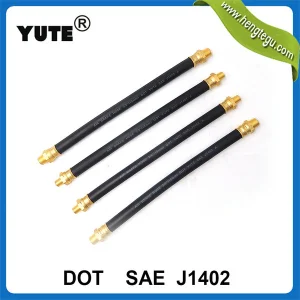
Adhering to DOT, SAE J1401, and SAE J1402 standards to guarantee maximum safety in hydraulic and air brake systems.
Utilizing advanced materials like EPDM, PTFE, and Stainless Steel braiding to meet modern automotive engineering requirements.
The shift toward Electric Vehicles (EVs) is the most significant trend in the automotive hose assembly industry. Unlike traditional Internal Combustion Engines (ICE), EVs require complex thermal management systems to keep battery packs within optimal temperature ranges. This has led to a surge in demand for lightweight, high-precision cooling hoses and refrigerant lines (R134a/R1234yf).
Furthermore, the integration of smart sensors into hose assemblies—allowing for real-time monitoring of pressure and fluid integrity—is on the horizon. Manufacturers are also moving toward "Green Production," using recyclable elastomers and reducing the carbon footprint of the manufacturing process to align with global ESG (Environmental, Social, and Governance) goals.
Shenzhen Partix Auto Co., Ltd. sits in Zhucheng, Shandong. This spot lies close to Weifang, known as the kite capital. Moreover, it falls within the one-hour circle around Qingdao. As a result, transportation stays easy and quick.

People founded Partix Auto back in 2004. Today, others see it as a national high-tech company. It also counts as a state-owned holding listed firm. The team pushes hard on new ideas. Because of that, Partix Auto won the title of “National Intellectual Property Demonstration Enterprise.” And since 2006, experts have regularly named it among the “National Top 100 Automotive Parts Suppliers.”
Partix Auto leads strongly in China’s automotive parts field. The company mainly designs and builds top-grade fluid pipelines. It also makes car suspension systems and produces rubber parts that reduce vibration. In general, its main products include bushings, air spring products, engine mounts, fluid line system products, thrust rods, and car suspension systems. These items are widely used in passenger cars, commercial vehicles, and engineering machinery.
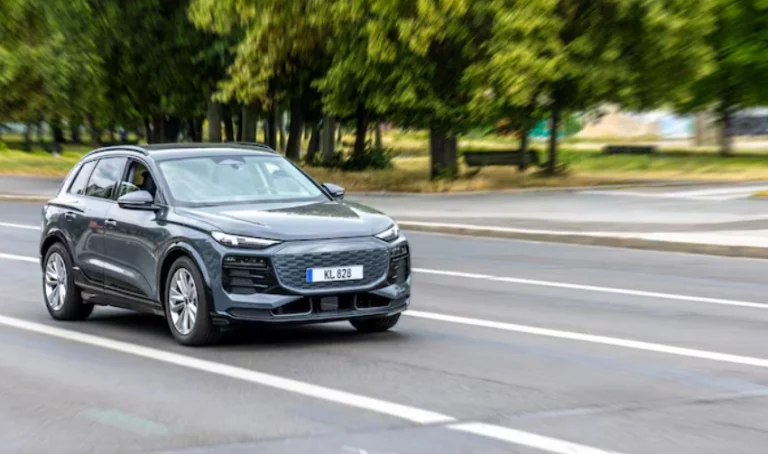
Partix Auto follows a clear goal: to serve automotive parts suppliers and OEM customers with high-quality solutions while creating real value. By delivering integrated system solutions, the company meets the evolving demands of global automotive partners.
From raw rubber compounding to precision CNC fitting fabrication, our in-house control ensures the highest quality and competitive pricing for the global market.
Our dedicated laboratory performs ozone resistance, burst pressure, and tensile strength tests, ensuring every assembly exceeds international safety benchmarks.
Located near the Qingdao port, we offer rapid shipping solutions to Europe, America, and Southeast Asia, significantly reducing lead times for our partners.
We provide tailor-made solutions for specific vehicle models, including Land Cruiser, Prado, and Corolla, as well as high-performance racing applications (AN4-AN16).
Automotive hose assemblies are not "one size fits all." Different regions and terrains demand specific engineering: