Partix Auto
Partix Auto
Partix Auto
Explore our highly reliable, top-tier automotive fluid transmission and NVH isolation mechanisms.
Modern steering column components have evolved from simple rotating mechanical rods to highly integrated digital input sensors and energy-absorbing safety modules. As a critical structural and safety element, the steering column assembly must deliver flawless torsional rigidity while isolating drivers from unwanted road vibrations (NVH). Our engineering team focuses on minimizing backlash in telescoping joints and optimization of intermediate steering shaft assemblies.
By implementing cutting-edge micro-alloyed carbon steel configurations and precision cold-drawn splines, our steering system components withstand extreme axial loading and high rotational cycling. Integrating advanced elastomeric couplings with structural steering tubes guarantees that steering sensitivity is maximized, allowing drivers to execute precision maneuvers under all road profiles.
Our commitment to rigorous design parameters satisfies the strictest Tier-1 procurement standards, supplying reliable solutions for commercial vehicle networks and modern passenger platforms alike.
Every steering column assembly must possess energy dissipation pathways. During a collision event, collapsible inner/outer tube relationships telescope smoothly. Under targeted axial impact energy, engineered aluminum brackets shearing mechanisms absorb excessive forces, drastically reducing steering wheel cabin intrusion.
How Shenzhen Partix Auto Co., Ltd. builds elite mechanical integrity into heavy-duty steering environments.
Using induction hardening, we target key splined zones to achieve an exterior surface hardness of HRC 58-62. This prevents wear over decades while retaining a ductile core capable of handling high torsional shocks without cracking.
Our silent blocks and flexible steering couplers utilize synthetic EPDM and NBR blends that resist thermal fatigue up to 150°C and protect against grease, ozone, and chemical solvents commonly found in engine bays.
To reduce overall assembly mass, we apply internal high-pressure fluid molding. This process allows us to craft variable thickness profiles, reinforcing high-stress mounting tabs while thinning low-stress zones for vehicle light-weighting.
Shenzhen Partix Auto Co., Ltd. sits in Zhucheng, Shandong. This spot lies close to Weifang, known as the kite capital. Moreover, it falls within the one-hour circle around Qingdao. As a result, transportation stays easy and quick.
People founded Partix Auto back in 2004. Today, others see it as a national high-tech company. It also counts as a state-owned holding listed firm. The team pushes hard on new ideas. Because of that, Partix Auto won the title of “National Intellectual Property Demonstration Enterprise.” And since 2006, experts have regularly named it among the “National Top 100 Automotive Parts Suppliers.”
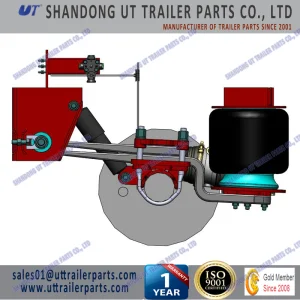
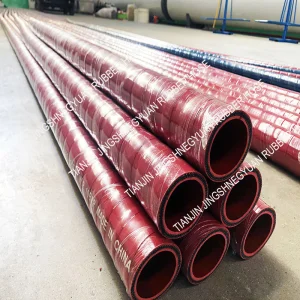
Partix Auto leads strongly in China’s automotive parts field. The company mainly designs and builds top-grade fluid pipelines. It also makes car suspension systems and produces rubber parts that reduce vibration. In general, its main products include bushings, air spring products, engine mounts, fluid line system products, thrust rods, and car suspension systems. These items are widely used in passenger cars, commercial vehicles, and engineering machinery.
Partix Auto follows a clear goal: to serve automotive parts suppliers and OEM customers with high-quality solutions while creating real value. By delivering integrated system solutions, the company meets the evolving demands of global automotive partners.
We continue to drive innovation in the automotive industry, turning advanced ideas into practical solutions for the future.
Navigating global supply chain complexities demands deep adherence to APQP (Advanced Product Quality Planning) frameworks. At Shenzhen Partix Auto Co., Ltd., we develop prototypes based on customer blueprints or mathematical models, verifying designs through rigorous FEA (Finite Element Analysis) stress profiling before tooling is initiated.
Our QA laboratories run continuous vibration-fatigue test cycles under dynamic temperature loads ranging from -40°C up to 120°C. By testing steering shafts for millions of rotations under continuous load conditions, we ensure that every export shipment conforms to the strict requirements expected by distributors in North America, Europe, and Asia-Pacific.
For custom engineering projects, our team provides complete PPAP (Production Part Approval Process) Level 3 documentation, including FMEA (Failure Mode and Effects Analysis) worksheets, material chemical validation reports, and dimensional layout documentation.
Driving the digital transformation from mechanical linkages to autonomous smart control systems.
Maximizing durability through induction hardened splines and synthetic polymer coatings. Focus on reducing telescoping friction, decreasing column axial runout, and enhancing the tactile feedback of the steering wheel.
Embedding high-precision torque and angle sensors into the column structure. Engineering specialized mounts that insulate delicate electronic control units (ECUs) and sensor heads from high-frequency road vibrations.
Developing fully collapsible, storable steering column architectures optimized for Level 4 and Level 5 autonomous driving systems. These designs retract cleanly into the dashboard layout when self-driving programs are active.
Located in Zhucheng, Shandong, our state-of-the-art facility integrates Industry 4.0 manufacturing processes to ensure extreme dimensional accuracy and quick response times. By utilizing fully automated robot welding stations and high-speed CNC spline-milling centers, we maintain geometric tolerances within ±0.02mm, ensuring seamless fits during assembly.
Our digital supply-chain network tracks raw materials from reliable steel mills to finished products loaded at the Port of Qingdao. This high-efficiency infrastructure shields global buyers from raw material cost fluctuations, providing predictable pricing and reliable product availability.
Furthermore, our dedicated custom rubber vulcanization lines operate with continuous process monitors. By regulating cure times, temperatures, and pressures, we guarantee that all co-molded metal-rubber brackets have robust bonding interfaces that resist degradation over years of heavy use.
Addressing the common questions, failure modes, and engineering solutions of steering and fluid system components.
Axial play and clunking noises are typically caused by wear in the sliding splines or the failure of the internal plastic glide shoes. Over time, constant adjustments and road vibration compress these plastic inserts, leading to microscopic clearance between the inner and outer shafts. We solve this issue by utilizing precision-molded nylon coatings on our splines (such as PTFE-impregnated polyamide), which absorb impacts and maintain zero-backlash operation throughout the lifetime of the vehicle.
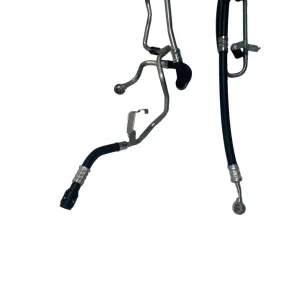
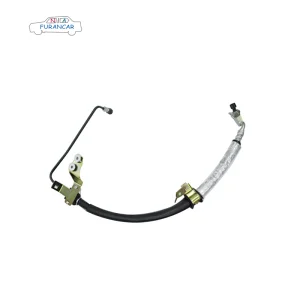
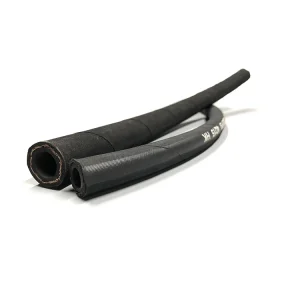
Our high-pressure fluid lines, such as the Nissan Teana Power Steering Hose, incorporate integrated tuning cables and expansion chambers inside the hose assembly. These components are specifically tuned to damp hydraulic pressure ripples generated by the power steering pump. The composite rubber structure acts as a physical attenuator, absorbing high-frequency pressure spikes and ensuring quiet cabin operation.
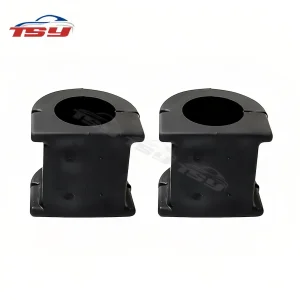
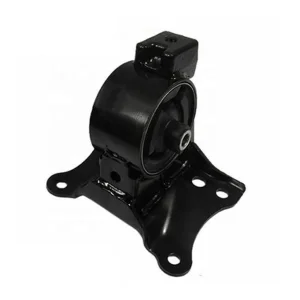
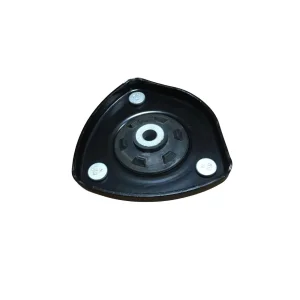
We analyze the component's operational environment, looking at static load, dynamic oscillation frequency, and thermal exposure. For high-stress areas like the Lexus control arm bushings, we formulate rubber compounds with high tensile strength and tear resistance. For engine and transmission mounts, we focus on dynamic stiffness ratios, tuning the elastomers to minimize vibration transfer under idle engine frequencies while remaining rigid during high-torque acceleration.
IATF 16949 is the global standard for automotive quality management systems. It demands continuous improvement, defect prevention, and the reduction of variation and waste in the automotive supply chain. By maintaining this certification, Shenzhen Partix Auto Co., Ltd. ensures that every batch of products, from steering components to engine mounts, undergoes rigorous SPC (Statistical Process Control) and full batch traceability.
Our steel steering column parts are treated with advanced protective coatings, including zinc-nickel plating, black oxide, or electrophoretic deposition (E-coating). These coatings are tested in salt spray chambers to survive over 240 to 480 hours of exposure without developing red rust. This protection ensures long service lives, even in regions that apply corrosive road salts during winter.
Yes. Our CNC machining division uses multi-axis mill-turn centers to produce shock absorber rods, pistons, and mount rings. We regularly meet dimensional tolerances of ±0.005mm and achieve surface roughness finishes of Ra 0.2, ensuring optimal performance when combined with hydraulic seals.
Inside our advanced production plants, testing labs, and machining workshops in Zhucheng, Shandong.
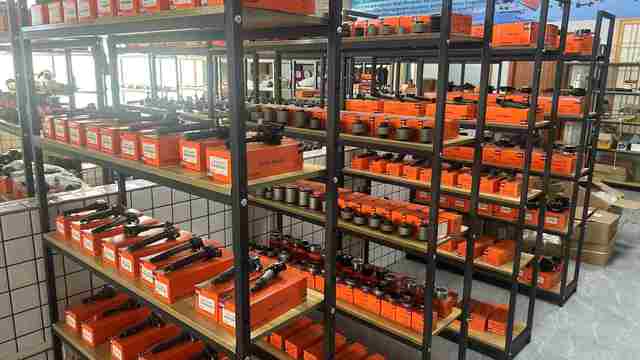
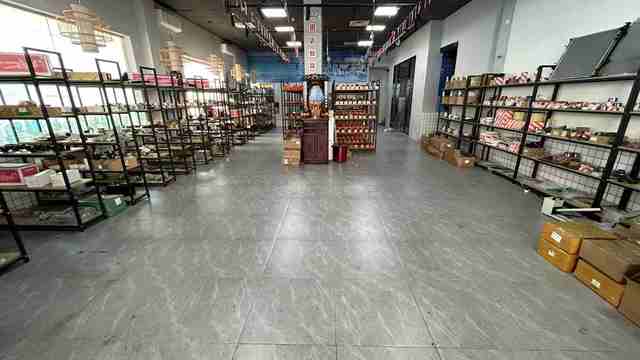
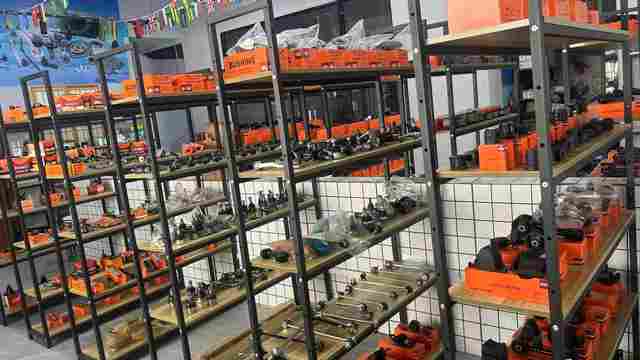
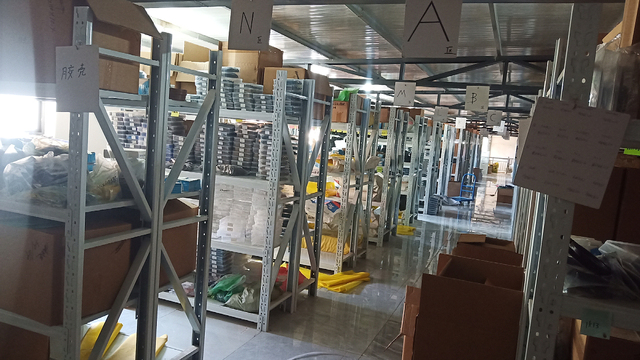
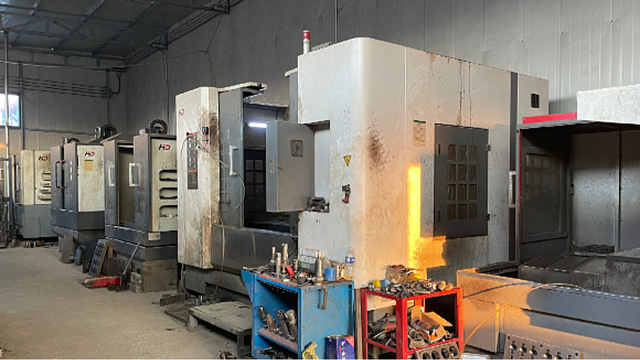
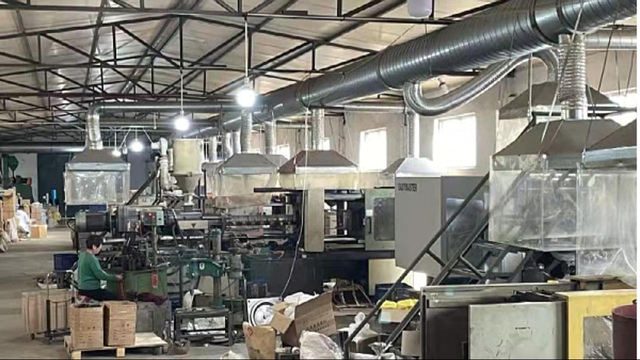
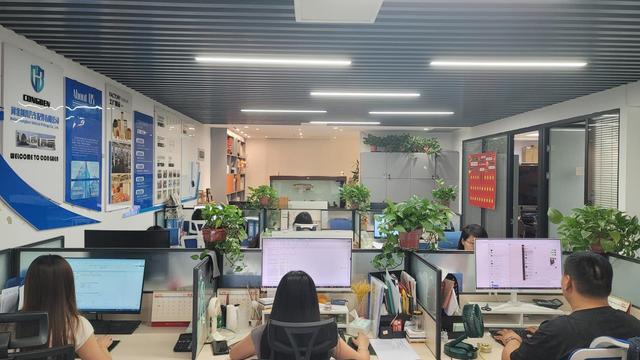
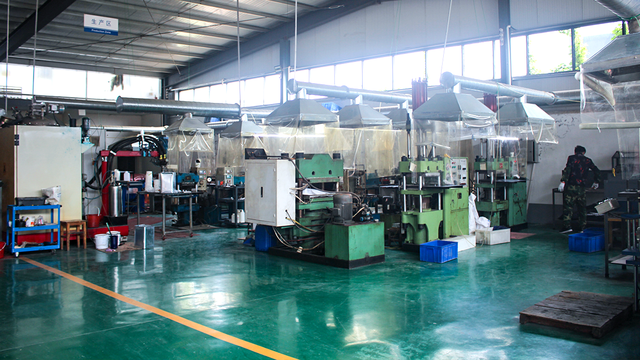
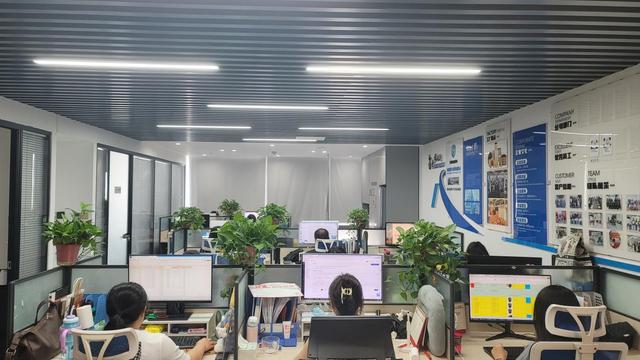
Premium solutions designed for engine isolation, fluid transfer, and commercial vehicle heavy suspension systems.